
New Federal Dietary Guidelines
If you’ve been reading Excel & Thrive for any length of time, none of this will feel radical.
For years, we’ve written about how the root of chronic diet-related health issues isn’t about too many calories, it’s about the quality of the calories we eat.
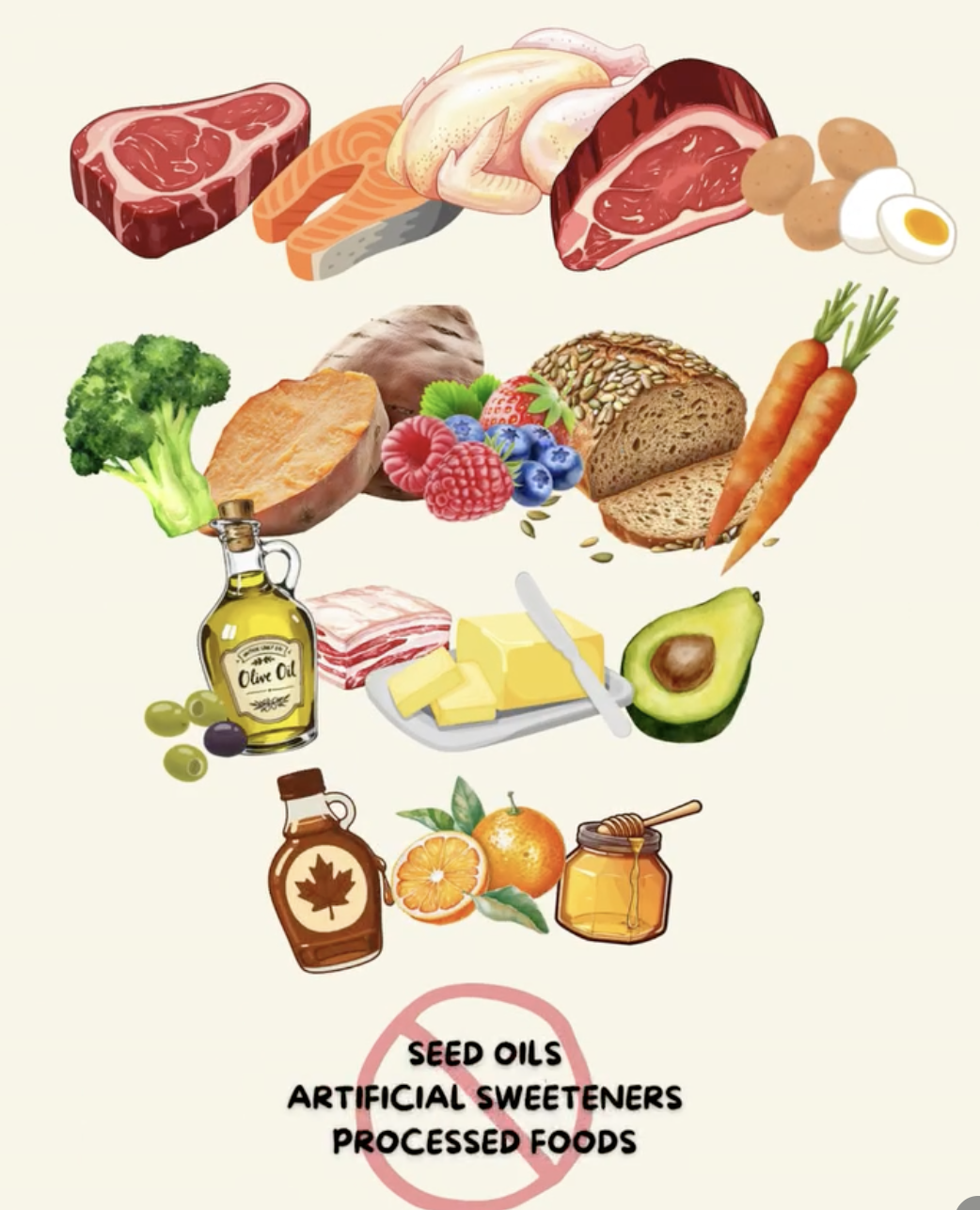
On January 7, 2026, the federal government released the Dietary Guidelines for Americans, 2025–2030, a major shift toward prioritizing whole, nutrient-dense food over highly processed products. You can read the announcement and access the guidelines here: Dietary Guidelines for Americans.
This guidance represents a meaningful turn away from old calorie-counting frameworks and toward the common-sense message we’ve been championing for years:
Eat real food.
Let’s unpack what this means and where nuance still matters.
Protein Is Back at the Center of the Plate
We’ve said many times that meals built around protein, healthy fats, and real carbohydrates leave you feeling nourished and sustained; not hungry again an hour later.
The new guidelines clearly state that protein should be prioritized at every meal. This echoes what we’ve taught: protein provides steady energy, supports hormone balance, and fuels metabolic health.
In practice, that means ensuring every meal includes a high-quality source of real animal protein, the kind you can recognize on a plate, not a box.
Fat Is Not the Enemy: Quality Matters
For decades many Americans were told to fear all fat. At Excel & Thrive, we’ve always pushed back on that.
The updated guidance not only allows but encourages natural fats from whole foods, rather than chemically altered, factory-made fats. This includes:
Full-fat dairy
Animal fats from meats
Whole-food-based fats like avocados and olives
This aligns with our long-standing message: when food is stripped of its natural fats, it’s replaced with sugar and additives that harm health, and that’s what really needs to go. If it comes from a farm, it’s likely a better choice than the alternative.
Sugar: A Clear Line in the Sand
The new guidelines take a bold step by stating that no amount of added sugar is recommended as part of a healthy diet. They urge adults to avoid sugar-sweetened beverages entirely and recommend children under certain ages avoid added sugar altogether.
We’ve written extensively about why added sugars (especially in drinks and packaged snacks) disrupt metabolism and crowd out real nutrients.
Remember: added sugar is not the same as sugar that occurs naturally in whole fruit, dairy, or other whole foods. Our previous blog on sugar distinctions goes into this in more depth:
Read More: Real vs. Refined Sugar - What Your Body Needs
Carbs: Not All Created Equal
One of the biggest missteps in nutrition advice over the years was the message that all carbohydrates are bad, and this is a message we’ve always challenged. The new guidelines explicitly link refined carbohydrates (like white bread, crackers, and many boxed cereals) to poor health outcomes and urge a reduction in these foods.
But carbohydrates themselves are not the enemy.
Your body thrives on carbs when they come from real food sources, the kind that still have fiber, vitamins, and structure:
Root vegetables
Fruit
Squash and sweet potatoes
Legumes (when tolerated)
These real food carbs provide fuel for the brain, support thyroid function, and help keep digestion moving. That’s why in past posts we’ve highlighted the difference between healthy carbohydrates and their refined counterparts, because where the carbs come from matters deeply.
👉 For a deeper look at this distinction, click the button below!
Read More: Healthy Carbs vs. Refined Carbs
It’s All About Quality, Not Fear
Focus on real, recognizable ingredients.
Build meals around nutrient rich protein and healthy fats.
Choose carbohydrates that are whole, not processed.
Avoid added sugars and artificial additives.
We’ve never promoted extremes or simplistic “rules.” We’re about good food first; food that nourishes, sustains, and helps you thrive, not just survive. The new Dietary Guidelines may be making headlines for flipping old paradigms, but the core message is one we’ve echoed again and again:
Real food works.
And it always has.
Shoot us a message if you have any questions, or if you’d like your own copy of the new guidelines!